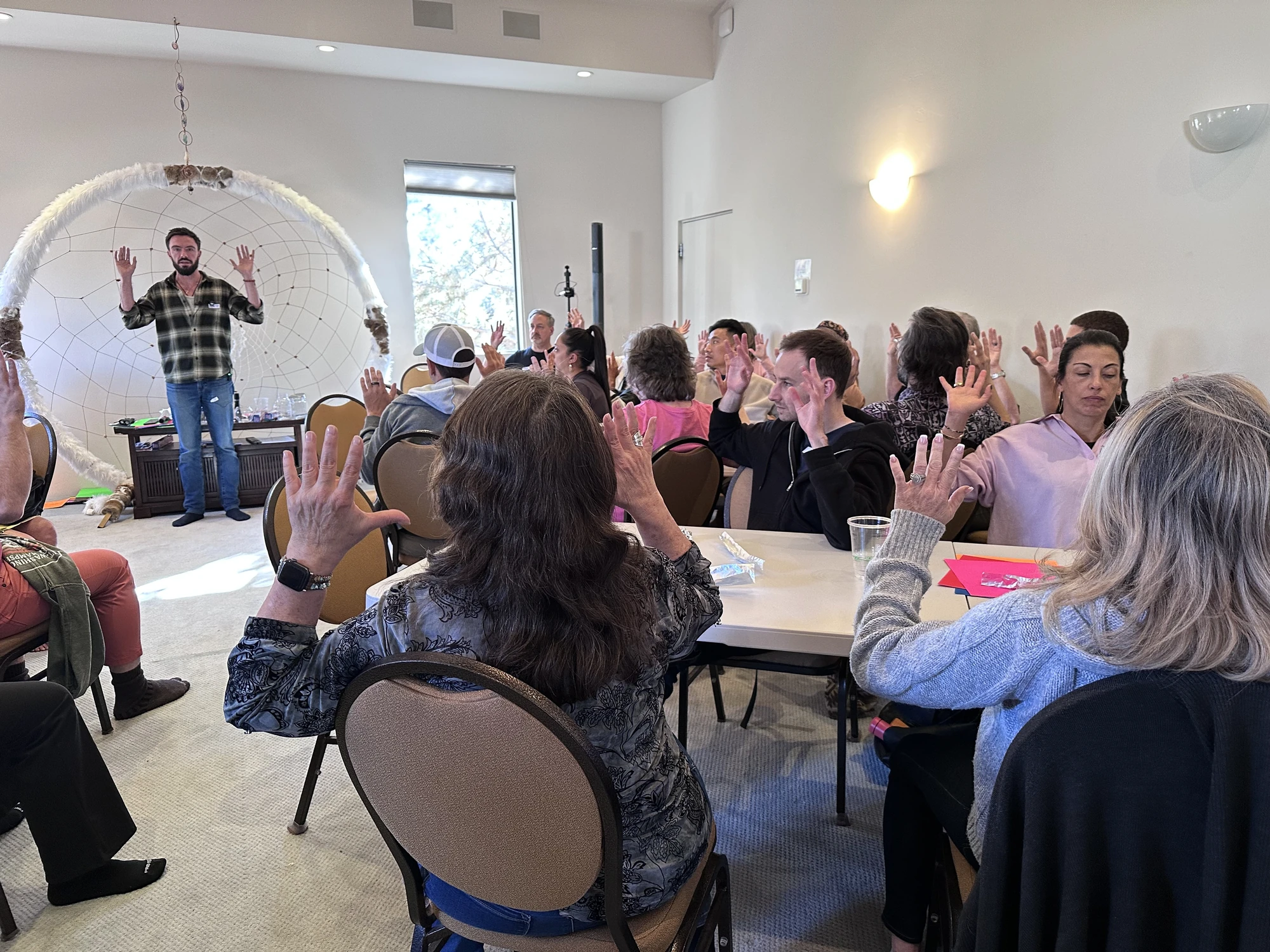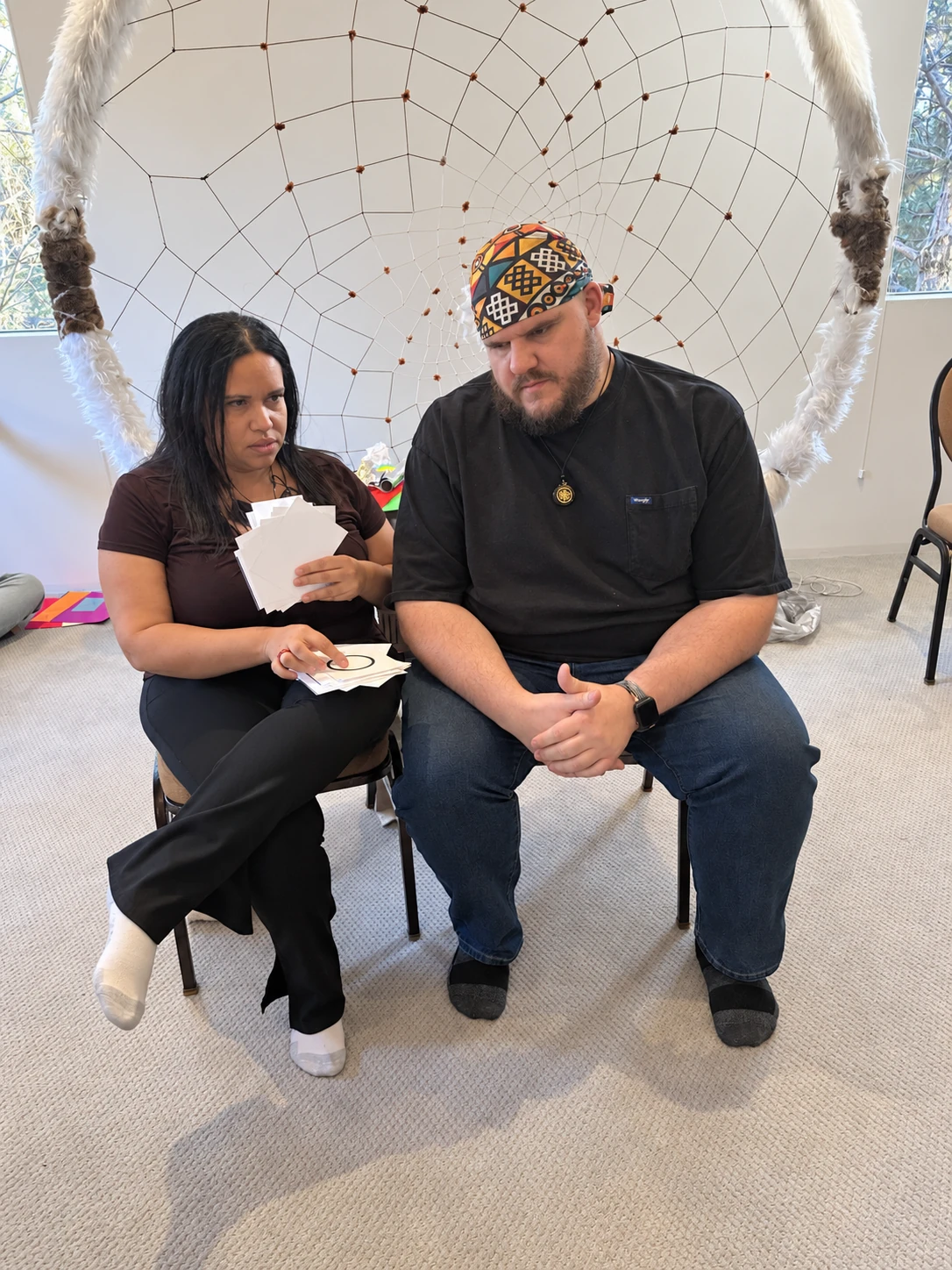
A concrete starting point
Telepathy concerns apparent information associated with another person’s thoughts or experience beyond ordinary sensory communication. A training exercise makes that broad idea concrete. One person may attend to an image while another records impressions without seeing it. The activity creates a shared task, an opportunity to practise attention and a record to discuss. It is different from ordinary empathy, which can use tone, facial expression and familiarity. Both may feel meaningful, but they ask different questions. Naming the distinction helps a group explore without having to agree immediately on an explanation.
A simple paired exercise
For an introductory exercise, partners can agree on a small set of images, choose one without showing it to the receiver and set a clear period for recording impressions. The receiver might write words, describe sensations or make a sketch. The sender attends to the target without speaking about its content. At the end, the partners preserve the record before revealing the image. This is an educational example, not a universal Sensus method. Different teachers use different formats. Ask your trainer what the exercise is intended to develop and how its feedback is handled.
Attention without pressure
Trying to force an impressive answer can make it difficult to notice a subtle or uncertain impression. A useful partner leaves space for the person to describe what occurs in their own language. Silence, uncertainty and a lack of correspondence are all things a participant should be able to report. This does not mean that every vague sensation is information about the target. It means the session can remain honest while someone learns how to attend. A good learning atmosphere supports both curiosity and the freedom to say that nothing clear happened on a particular attempt.
Keep the ordinary channels clear
Partners naturally communicate through voice, movement, expressions and habits. Those ordinary channels matter when an exercise asks about information beyond them. A sender might inadvertently react to a description or reveal part of an image. Familiar target sets may become predictable. Agreeing on the arrangement beforehand makes these details easier to manage without turning the session into an accusation. You can begin with a friendly training exercise and later ask how the experience changes when ordinary cues are reduced. Describe which arrangement you used rather than presenting all sessions as equivalent.
An impression is not yet an interpretation
Consider the difference between writing blue, movement, open space and writing ocean. The first is a set of descriptions; the second is a conclusion. Both can be recorded, but keeping them distinct lets you examine the sequence. If the target turns out to be a swimming pool, it is useful to know what was written before the answer was revealed. Retelling only the final resemblance can erase uncertainty and competing interpretations. A sketch, a few words and a dated note often preserve more useful information than a polished account written much later.
What makes feedback useful
Compare the full record with the target. Discuss specific correspondences, contradictions and details that could fit many alternatives. Avoid inviting the receiver to keep guessing until something matches. If several possibilities were named, keep them all. The purpose of feedback is to help partners understand the session, not to award one person a special identity. Repeating a clearly described task gives both people more to work with than selecting a single memorable success. It also makes the experience easier to discuss with a teacher who was not present.
A research example to follow
Wahbeh and colleagues reported a telephone study in which a server selected the caller either before or after the receiver’s guess. Of 177 people who tried at least one trial, 105 completed all twelve. Among completers, accuracy was 50.0% in the pre-selected condition against a 33.3% chance baseline, and 31.9% in the post-selected condition. Only the former exceeded chance statistically. The authors discuss support for a psi interpretation while noting that conventional explanations cannot be completely excluded and that recruitment difficulties led to protocol changes. These are findings from that design, not a guarantee of training results. The linked paper gives readers a more useful starting point than an anecdote alone.
Telepathy and other forms of perception
A receiver may describe a concealed picture when another person knows it, or work with a target that nobody present has seen. Those situations raise different questions. In the first, the exercise may be framed as telepathy. In the second, remote viewing or clairvoyance may be more relevant terms. If the target is selected only after the response, precognition becomes part of the question. These distinctions do not require a newcomer to choose a theory. They help explain why careful descriptions of an exercise matter more than applying an exciting label after the event. Even when a sender knows the target, a successful response alone does not establish whether its source was the sender, the concealed target or later feedback. The task description and the proposed explanation remain separate.
Respect personal boundaries
A paired exercise works through agreement. It does not give anyone permission to claim access to another person’s private thoughts or to present impressions about them as facts. Use benign targets, obtain permission for recordings and agree on whether a session is private. Avoid using a practice impression to make consequential judgments about a relationship, health or personal character. Within a training, anyone should be able to decline a partner or an activity. Clear boundaries make it easier for people to take part openly and help keep the work centred on learning.
Bring the experience into continued learning
After a session, note one thing you learned about the activity and one question you would like to explore next. Perhaps you want to change the target set, try a different partner or preserve sketches more consistently. Change one element at a time when possible. A small, repeatable practice is easier to learn from than a complicated arrangement that changes constantly. If the subject interests you, a training offers guidance, different approaches and people to practise with. The aim is not to settle every question in one afternoon. It is to begin an informed exploration you can return to.