Write the question first
Before an attempt, state what you are exploring. If there is a target, decide how it will be selected and when it will be revealed. Write what would count as a match before seeing the outcome. This makes the later comparison clearer.
Describe the conditions
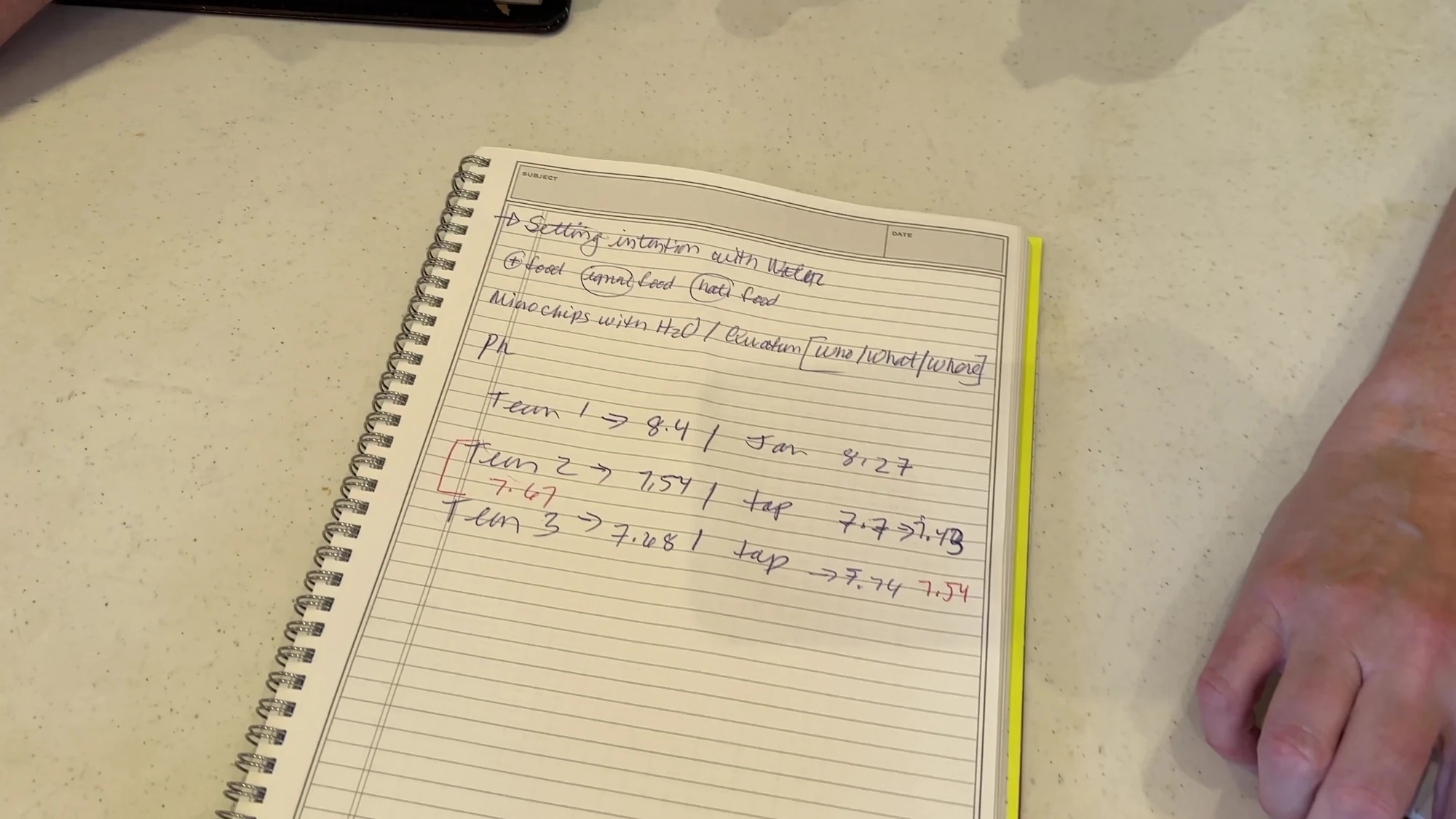
Note the date, materials, setting and who was involved. For a perception exercise, include what information each person had. For an object exercise, include contact, supports, warmth, air movement and vibration where relevant. A short, specific account is enough to begin.
Keep the first response
Record words, sketches or observations before feedback. Preserve the original and add later reflections separately. If you use a recording, agree on that with everyone involved and keep enough context to understand the whole attempt.
Keep every attempt
An interesting moment is easier to understand alongside the attempts around it. Record misses, uncertain responses and uneventful trials as well as successes. Avoid rewriting a broad response into a precise one after the target is known.
Make the next attempt informative
Choose one question raised by the session. Perhaps a target was too familiar, a partner gave an unintended cue or a table moved. Change one useful part of the setup and record what changed. Practice can remain playful while becoming more carefully observed.
Share with care
Before sharing another person’s experience, ask for their agreement and credit their contribution. Distinguish the observation from your explanation of it. This helps the next person learn from the work and offer useful questions of their own.