More than identifying a colour
Extraocular Vision, often called MindSight, concerns perceiving visual information while the ordinary view through the eyes is blocked. In training, the task can be close and concrete: recognising a coloured sheet, describing a symbol, reading a word or finding a nearby object. More involved activities may include navigating a space with guidance. These activities share an interest in nearby perception, but they ask different things of the participant. Recognising one of a few colours is not the same task as reading an unfamiliar sentence. A useful introduction makes those differences visible instead of treating every exercise as interchangeable.
A teacher’s perspective
Dalia Burgoin teaches MindSight as a learnable form of blindfolded perception. Her FAQ describes a comfortable light-blocking mask, relaxation and variation in how quickly people learn. She works with sighted and blind students while distinguishing this education from treatment or psychic readings. Here, MindSight names the training practice, not a diagnosis or a promise to restore eyesight. The practical questions are what participants do, what support they receive and how the conditions are described.
What a partner contributes
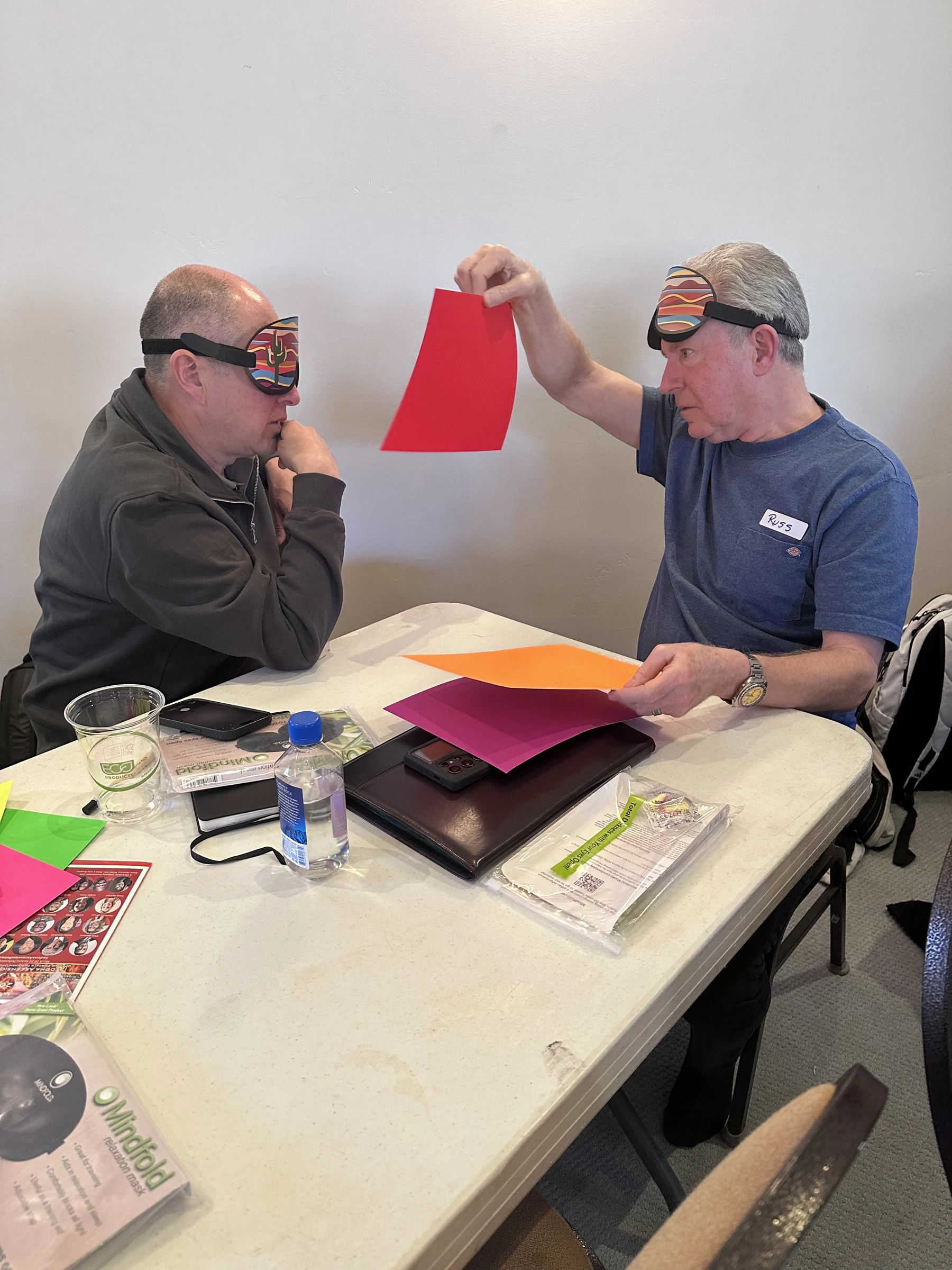
Paired practice is a relationship as well as an arrangement of materials. A partner can help fit the mask, describe the task, present objects and provide feedback. They also help create an atmosphere in which the participant can report uncertainty without embarrassment. For example, saying that an impression feels warm, curved or red is different from claiming certainty that the target is a red circle. Allowing those distinctions gives the teacher something useful to work with. It also prevents a session from becoming a performance in which the participant feels obliged to produce an impressive answer.
Start with a question you can understand
Before beginning, agree on what the exercise asks. Is the participant naming a colour from a known set, describing an unknown shape or reading a line of text? How many alternatives are available? When will the answer be revealed? Clear instructions need not make the session formal or tense. They free attention for the activity itself. If the task changes, note the change rather than treating all attempts as the same. A colour exercise with two possible responses and an open description of an unfamiliar object can both be interesting, but their outcomes need different interpretation.
The mask and the immediate surroundings
The blindfold is part of the exercise, not an incidental costume. Its fit, opacity and position should be checked in the actual lighting. Participants should feel comfortable and able to stop or adjust it. A description of an exercise should explain where the target was held and how the participant was positioned. If an ordinary line of sight is available, the session can still be a learning experience, but it cannot answer the same question as one in which sight was blocked throughout. Clarity about the conditions makes an account more useful to the next learner.
From colours to reading
A progression of tasks can give a participant different ways into the experience. Large blocks of colour place different demands on attention from small printed letters. Familiar objects differ from novel symbols. Reading introduces additional questions: was the text already known, could its content be guessed, and how much of it was described accurately before feedback? These are not reasons to avoid the exercise. They are ways to understand it. A teacher may choose an easier activity to build familiarity, then vary one element at a time. Ask the trainer how their own approach moves between these tasks.
Navigation needs a different kind of care
Moving around while blindfolded introduces ordinary physical risks that a seated card exercise does not. Any navigation activity should be supervised in a clear, suitable space, with permission to pause and remove the mask immediately. It should not take place near traffic, stairs, water or other hazards. A striking video is not a reason to try its setting alone. In a training, ask who guides the activity, how the space is prepared and how participants communicate discomfort. The aim is to make room for exploration without asking anyone to give up ordinary care for their body.
Keep an account that you can return to
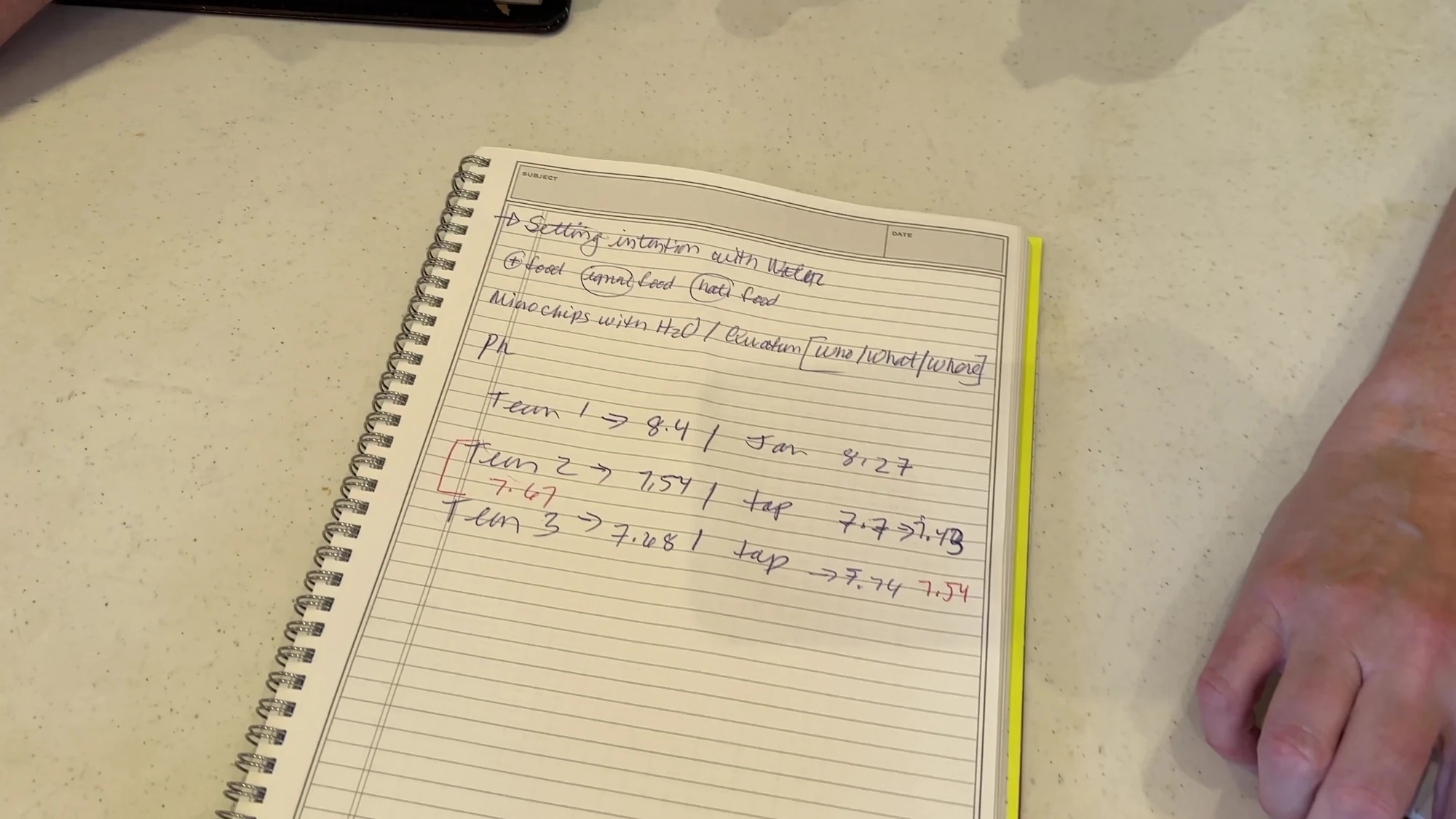
A short record can capture the date, the task, the mask, the alternatives, the response and the feedback. Write the response before the target is revealed where possible. Include uncertain answers and attempts that did not correspond. If someone describes several possibilities, preserve all of them rather than keeping only the one that later seems relevant. Recordings can help when everyone has agreed to their use, but participants should not have to become promotional subjects to learn. A private learning record and permission to publish an account are separate decisions.
Experience, interpretation and continued practice
A vivid experience may matter personally even while its explanation remains open. It is useful to keep three questions separate: what did I experience, what did someone else observe, and what do I think explains it? Sharing those distinctions can make conversation more generous and more precise. They allow people with different interpretations to compare the same session. Over time, you may become interested in which conditions help you attend, which tasks feel different and what changes when the activity is repeated. That is a more informative direction than treating one attempt as the final word on your ability.
Choosing a training
Look for a clear account of the teaching approach, group format, daily practice and available guidance. Ask about accessibility, mask comfort and any prerequisites. If you want to explore reading or navigation in particular, check that these are actually included rather than assuming they follow from the MindSight name. Consider how you would continue afterwards: a partner, a safe setting and a manageable practice rhythm can be more useful than ambitious plans you cannot sustain. The practical starting point is simple: find a suitable training, bring your questions and give yourself room to learn.